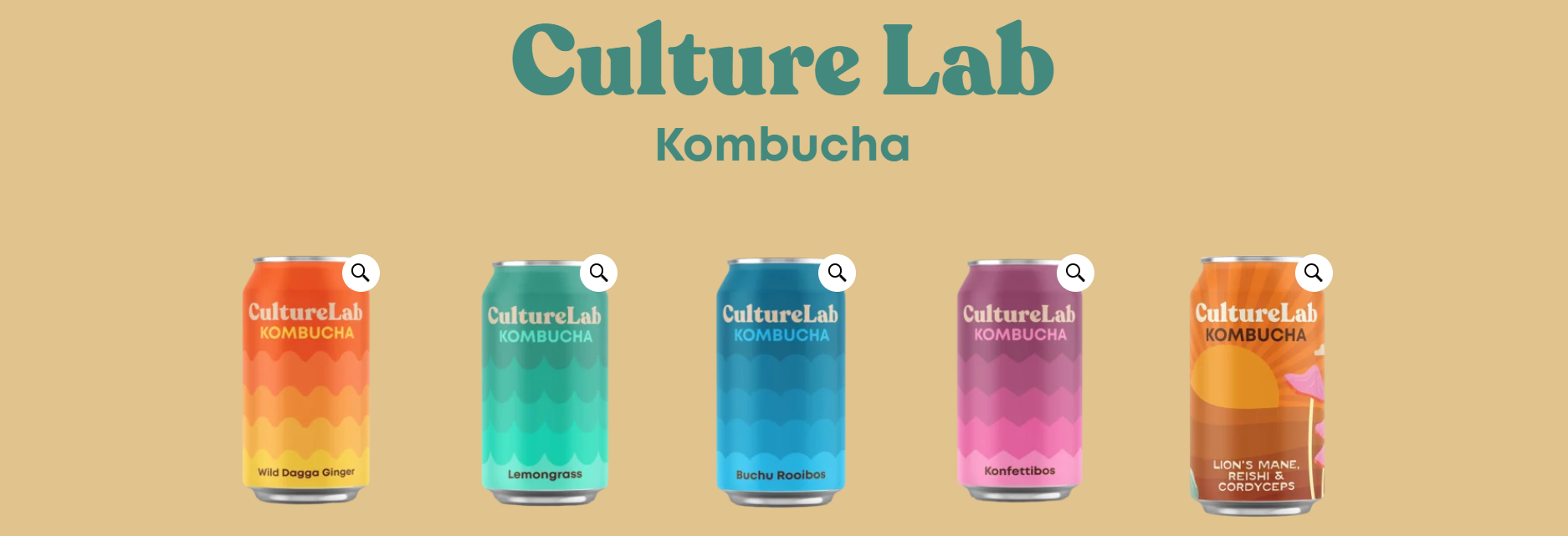
CultureLab CultureLab Kombucha is a premium slow brewed raw Kombucha. It can be enjoyed as a healthy alternative to soda drinks and alcoholic beverages (or as a mix there in) or consumed purely for the delicious taste and gut healing properties.
About Kombucha
So right now you might be wondering:” What is this ‘KOM-BOO-CHA’ anyway and should I drink it?” So, let’s get into it.
Kombucha is as old as the times itself. Nobody knows for sure but we know it had its roots about 2000 years ago in the far east. Legends have it that an emperor looking to live forever was given kombucha by his wise men as the elixir of life. It soon gained popularity and started to spread around the world via the old trade routes.
About 20 years ago kombucha exploded back onto the scene in the USA and is now globally a billion-dollar industry.
Claims to its various health benefits seem as wild as ever before. So, let’s tread with caution and have a closer look at what exactly it is and what it can do for us.
Kombucha is made from fermenting sweet tea with a Symbiotic Culture Of Bacteria and Yeast also known by its acronym SCOBY. To make a ferment one would brew sweet tea, add ready-made kombucha to it and a peptide culture referred to as “the Mother”. Pretty weird. ‘The Mothers’ come in all shapes and sizes. Growing atop of each new ferment surface formed by various bacteria and yeast. Some pearly white and beautiful, while others look like they could scare off self-proclaimed hard men. Here at CultureLab we love them all the same.
So, you might be wondering if kombucha contains yeast, why is it not alcoholic? The answer is rather beautiful. Symbiotically the bacteria work together with the yeast. The yeast breakdown the sugars and create small amounts of alcohol and then in turn the bacteria break down the alcohol and produce beneficial acids and enzymes that give kombucha it’s vinegary sour taste and probiotic rich profile. No you can’t get tipsy on it, believe me we’ve tried. The trace amounts of alcohol typically don’t exceed 0,5%. It is for this reason it is considered a fermented soft drink.
Fermented foods are bacteria rich and while we generally have a negative perception of bacteria it couldn’t be further from the truth. I hate to break it to you, maybe have a seat. Truth be told you and everybody you know, even your beloved little lap dog, have more bacteria cells in their body than human cells by a factor of 1 to 9 and your dog has no human cells at all. I know, shut the front door, right? So, by this definition you could say you are 9 times more bacteria than human. While covering every inch of our bodies bacteria make up only about 2kg of our total body weight and the human gut biome is home to more than 1000 different types of bacteria. With our gut now being considered as our second brain it is no wonder that keeping this guy healthy is probably a pretty good idea.
Kombucha can help do this by populating your gut with good bacteria and B-vitamin rich yeast. Lowering the acidity of the stomach and supporting digestion and nutrition absorption.
Kombucha contain B and C vitamins. B1 Thiamine, B6 and B12 help with cognitive function, stabilizing our mood and help fight against depression. Kombucha is also replete in vitamin C -being one of the safest and most effective nutrients, it aids in too many health benefits to list here; but did you know it also aids in stress relief by reducing the effect of cortisol in the body. Our CultureLab Kombucha has more than 60% of your recommended daily dose.
An estimated 90% of the body’s serotonin is produced in the gut and 70% of the body’s immune system is located in the gut, where a diversity of bacteria is best. We all know what we eat can affect our daily energy levels and our body weight, but did you know it also directly affects our immune system? So next time you reach for that energy drink, why not reach for a CultureLab Kombucha instead? Kombucha can give you a great lift without the high sugar and caffeine of energy drinks, while at the same time supporting a healthy gut.
While kombucha is much lower in relation to juices and regular sodas it is not sugar free. While the fermentation converts most it still contains some sugar. Those amounts will vary from brand to brand. However, there might be a soft landing to this too. Kombucha contains acetic acid which helps maintain blood sugar levels. Ultimately reducing the spike in blood sugars.
Kombucha is an adaptogen, meaning it is a plant derivative that help our body keep it’s innate healthy balance. Adaptogens are good sources of antioxidants that help remove free radicals and support a healthy liver, reduce sugar and alcohol cravings and boost immunity, energy and stamina.
Here are some other health benefits that have been observed:
* Balancing of homeostasis in the gut.
* Supports healthy liver function
* Improves digestion and bowel function
* Rebuilds connective tissue
* Boosts energy
* Reduces blood pressure
* Relieves head aches and migraines
* Reduces kidney stones
* Heals eczema
* Helps clear up candidiasis (yeast infection)
* Lowers glucose levels.
So now if you find yourself being a little skeptical, I won’t blame you. I personally don’t believe that kombucha is some elixir to all human ailments, but I do think we tend to underestimate what can happen when we make good choices. What I have learned is that the body has an amazing ability to heal itself. It wants to be in balance and when it is given the tools to do so it often takes care of the rest. This is how I believe kombucha is able to do some pretty radical things. Kombucha is not a one stop shop but it is a good choice and a great start; and if you try it out, I hope that it will lead you to make many more good choices and ultimately live a more fulfilling and happy life.
Copyright © My Cherry Blossom Beauty 2026. Powered by Shopstar. | Terms & Conditions. Privacy Policy.